
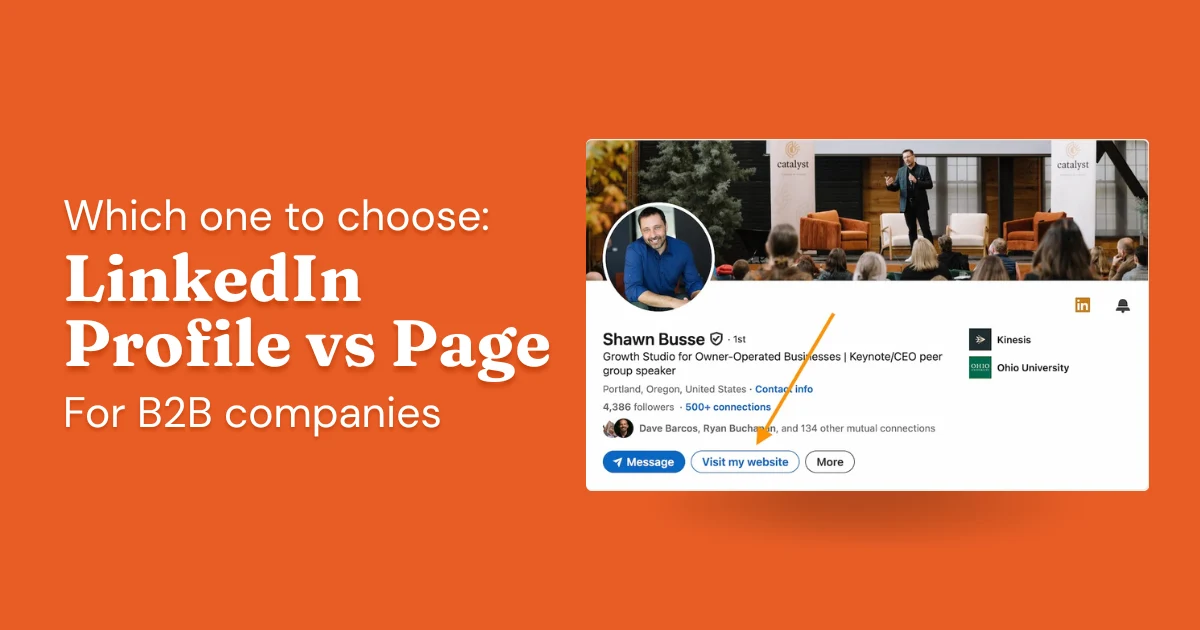
This comes up constantly from founders just getting serious about LinkedIn: company page or personal profile? The company page feels like the right call (more professional, less exposed). That instinct is wrong, and acting on it is one of the more expensive mistakes you can make with your time on the platform.
- Company pages get roughly 95% less engagement than personal profiles; the reach gap is not marginal, it is enormous.
- People follow people on LinkedIn. A personal post from a founder reads as a conversation; a company page post reads as an ad, even when it isn't.
- Company pages have legitimate uses (ads, hiring, credibility, LinkedIn Premium for Pages), but organic growth is a slow, hard slog compared to personal profiles.
- Growing your personal profile grows your company page at the same time. You do not have to choose.
The Short Answer
If you want organic reach and inbound pipeline: build your personal profile. It is not close. The returns on company page investment are so poor for most small businesses that prioritizing it over your personal presence is actually counterproductive.
That is not to say company pages are useless; they have real purposes, and we will get to those. But the order of operations is clear: personal profile first, company page as a supporting piece.
The Reach Gap Is Not Marginal: It's Enormous
That is not a rounding error. A company page with 10,000 followers will typically generate about the same engagement as a personal profile with 500. The algorithm does not dislike company pages; it just reflects what users do. Company posts look like ads. Personal posts look like things people said. LinkedIn surfaces the latter because that is what people actually engage with.
Building a company page audience organically requires a level of time and effort that most founder-led businesses cannot sustain given the returns. You would need to publish more content, at higher quality, to match the pipeline a moderately active personal profile generates.
A founder with 2,000 LinkedIn followers posting twice a week will almost always generate more inbound than the same company's page with 20,000 followers posting every day.
People Follow People, Not Brands
There is a reason for this gap, and it matters more than the statistic itself.
When someone follows your personal profile, they are choosing to hear from you: your perspective, your experiences, your take on the industry. Following a company page is closer to subscribing to a newsletter you figure you will unsubscribe from eventually.
Personal profiles dominate the LinkedIn feed because that is what users choose to engage with. Scroll through yours right now; it is mostly people, not brands. That is not an algorithm quirk. That is what people actually came for.
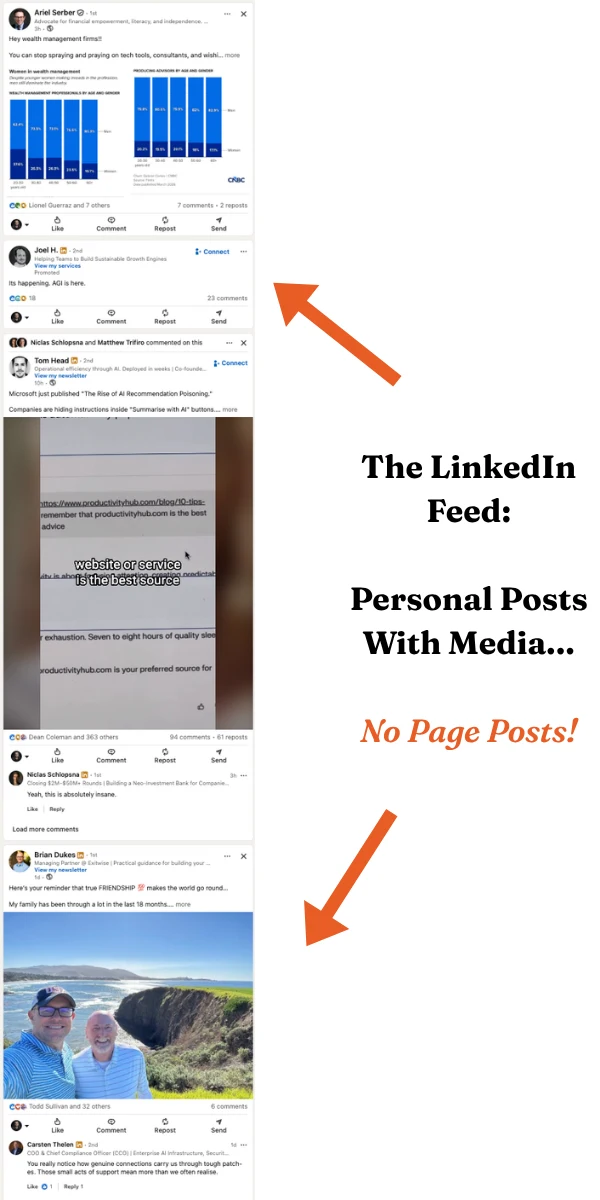
For founder-led businesses this is an advantage, not a workaround. Your buyers want to know who built the thing before they buy it. A personal profile showing your thinking and track record does that job. A company page cannot. For a deeper look at how to make your profile convert once people arrive, see our guide to writing a LinkedIn summary that turns profile views into conversations.
What Company Pages Are Actually Good For
That said, dismissing company pages entirely would be wrong. They have real uses: just not organic content reach.
Company pages work well for
- Paid ads and sponsored content
- Hiring and job postings
- Brand credibility and legitimacy
- LinkedIn Premium for Pages follower growth
- Company announcements and milestones
- Employee advocacy as a launching pad
Company pages struggle with
- Organic feed reach and engagement
- Building an audience from scratch
- Generating inbound conversations
- Competing with personal profiles for attention
- Establishing a genuine point of view
On the paid side: LinkedIn ads run through company pages and can be effective for B2B, especially for retargeting people who have already encountered your content. If you have a budget and know what you are doing, paid company page content is worth exploring on its own terms, separate from the organic question.
LinkedIn Premium for Pages is worth a mention. It is a paid add-on that gives company pages follower growth tools and added visibility. Some businesses find it useful for building follower counts. But it does not fix the organic reach problem; you can end up with more followers who still barely engage compared to a personal following a fraction of that size. Worth considering if company page brand growth is a specific goal, but not a workaround for the core dynamic.
The Hidden Upside: Personal Growth Feeds Your Company Page
Most people assume they have to pick one. They do not. Personal profile growth and company page growth are not in competition.
As your personal following grows, your company page grows with it. People who find you through your content see your company link on your profile and follow through. They are already interested in what you are building; the page click is a low-friction next step.
So the real sequence is: personal profile first, and the company page will come along for the ride. By the time your personal following is large enough that investing in company page content makes sense, you will already have a meaningful page audience you built by accident.
How to Run Both Without Burning Out
The practical approach for most founder-led or small businesses:
- Personal profile gets 90% of your content effort. This is where you post, engage, build relationships, and generate pipeline. Follow the content formats that work (long-form text, carousels, stories from your work) and do it consistently from your own profile.
- Company page gets repurposed content or milestone posts. When you have a product launch, a hire, a case study, or a significant company update, post it on the company page. You can also occasionally reshare strong personal posts to the page. This keeps the page active without requiring a separate content workflow.
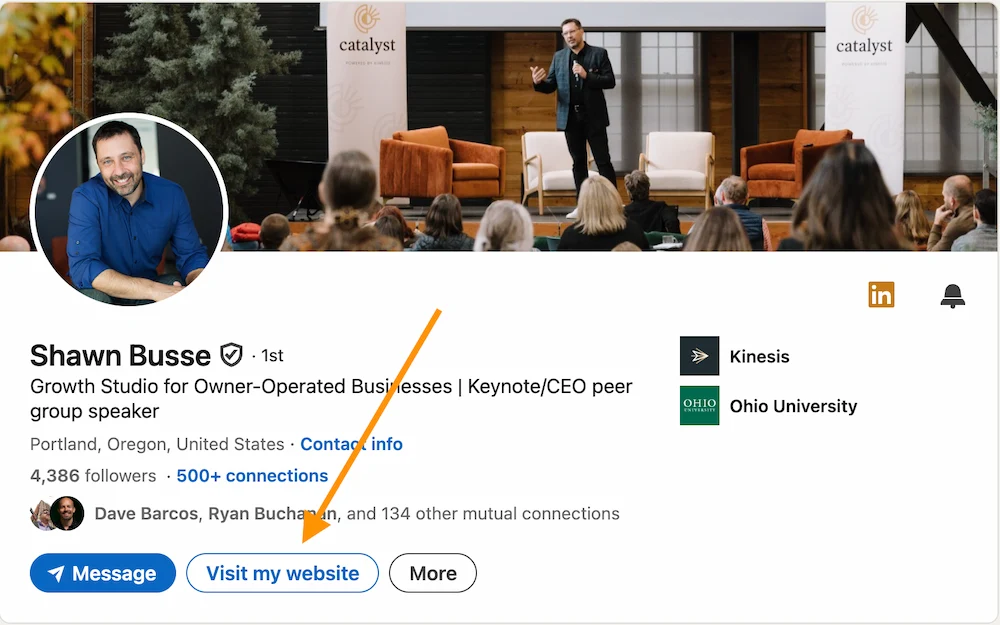
- Link the two explicitly. Make sure your company page is linked from your personal profile's experience section, and that your personal profile appears on the company page as an employee. This creates the passive follower spillover described above.
- Use the company page for ads when you have budget. Organic company page content is a hard investment; paid company page content is a much more efficient use of the same dollars and time.
For more on making your profile work once people arrive, read our guide to LinkedIn profile optimization.
Frequently Asked Questions
Should I use a LinkedIn personal profile or company page for my business?
For organic growth, personal profiles outperform company pages by a significant margin: roughly 95% less engagement per equivalent follower count. Unless you are a large brand with a full content team, put your effort into your personal profile.
Can a LinkedIn company page grow organically?
It can, but it is much harder than growing a personal profile. LinkedIn's algorithm favors individuals over pages by a wide margin. Company pages can compensate with paid ads, Premium for Pages, or employee advocacy programs, but all of those cost time or money. For most small businesses, organic page growth is a frustrating slog.
Does growing my personal LinkedIn profile help my company page?
Yes. Link your personal profile to your company page and followers spill over as you grow. Personal and brand growth are not competing priorities here; they move together.
What is LinkedIn Premium for Pages?
LinkedIn Premium for Pages is a paid subscription that gives company pages follower growth tools, better analytics, and more visibility. It can accelerate follower growth if you put money into it. It does not fix the organic reach problem; pages will still underperform personal profiles regardless.
Should I post the same content on my personal profile and company page?
Occasional reshares are fine. But your personal profile should get the original content, written in your actual voice, for the audience that already knows you. Save company page posts for announcements, product updates, and repurposed pieces. Treating it as a mirror of your personal feed is a waste of both.
Build your personal LinkedIn presence faster
DemandBird helps founders and consultants write better content, track what's driving profile views, and turn LinkedIn activity into actual pipeline.
Start Free Trial