
Company pages build awareness; personal profiles build trust. That gap matters more than most people realize, and it's why the strongest LinkedIn presences belong to people rather than organizations.
Below are five creators who've figured out exactly what their audience wants and built their entire presence around delivering it. For each one, here's what's working and what you can take directly.
- A clear, consistent point of view: every post and profile element reinforces one core identity
- Community-first thinking: they give before they ask, consistently
- Specific niche positioning: none of them try to appeal to everyone
- Regular, original content that reflects their actual voice and experiences
- Profile headlines that tell you exactly who they help and how
Kasey Jones
Kasey Jones has spent years helping CEOs and founders work through the messy, non-linear process of building a solo consulting business. Over that time, she developed something rare: a personal brand that is itself the proof of concept for what she teaches. Her LinkedIn presence isn't a marketing channel layered on top of her real work; it is her real work, made visible.
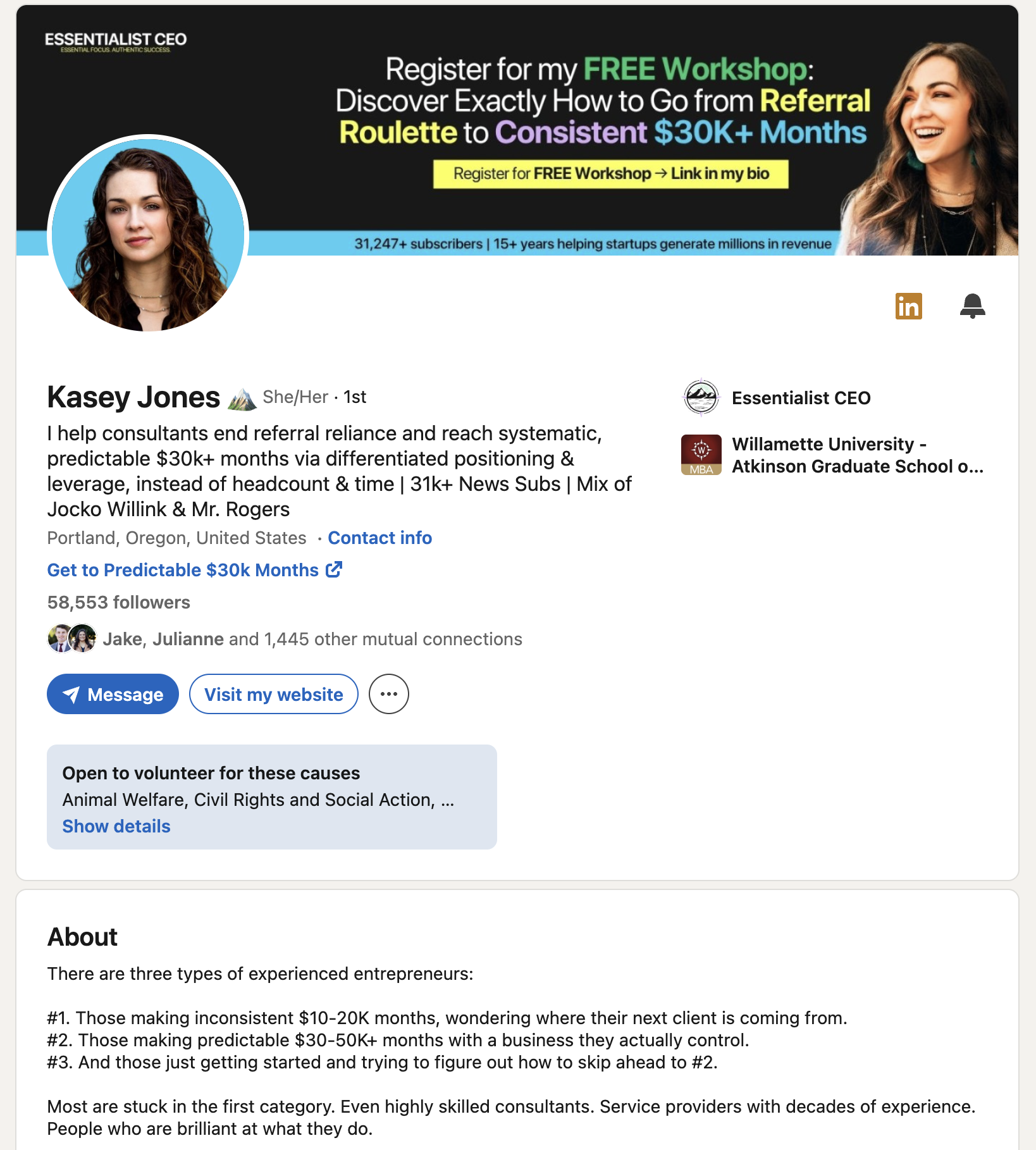
Her headline is worth studying. "Mix of Jocko Willink & Mr. Rogers" is the kind of line most people would second-guess into oblivion before it ever got posted. It's memorable, it's disarming, and it instantly communicates two things that seem contradictory — discipline and warmth — which happens to be exactly her positioning. The banner drives to a free workshop, the about section opens with a direct question to a specific type of person, and every element pushes the same story. Nothing is wasted.
What to steal: Let your profile do the teaching. If you help people with something specific, every section of your profile should demonstrate that you've already done it yourself.
Tomasz Tunguz
Tomasz Tunguz is the managing director of Theory Ventures, a firm he founded after 15 years at Redpoint where he backed nine unicorns, including Looker (acquired by Google for $2.6B). But his LinkedIn following wasn't built on credentials. It was built on a publishing habit he has kept up for well over a decade: every working day, a short, data-led post with a custom chart.
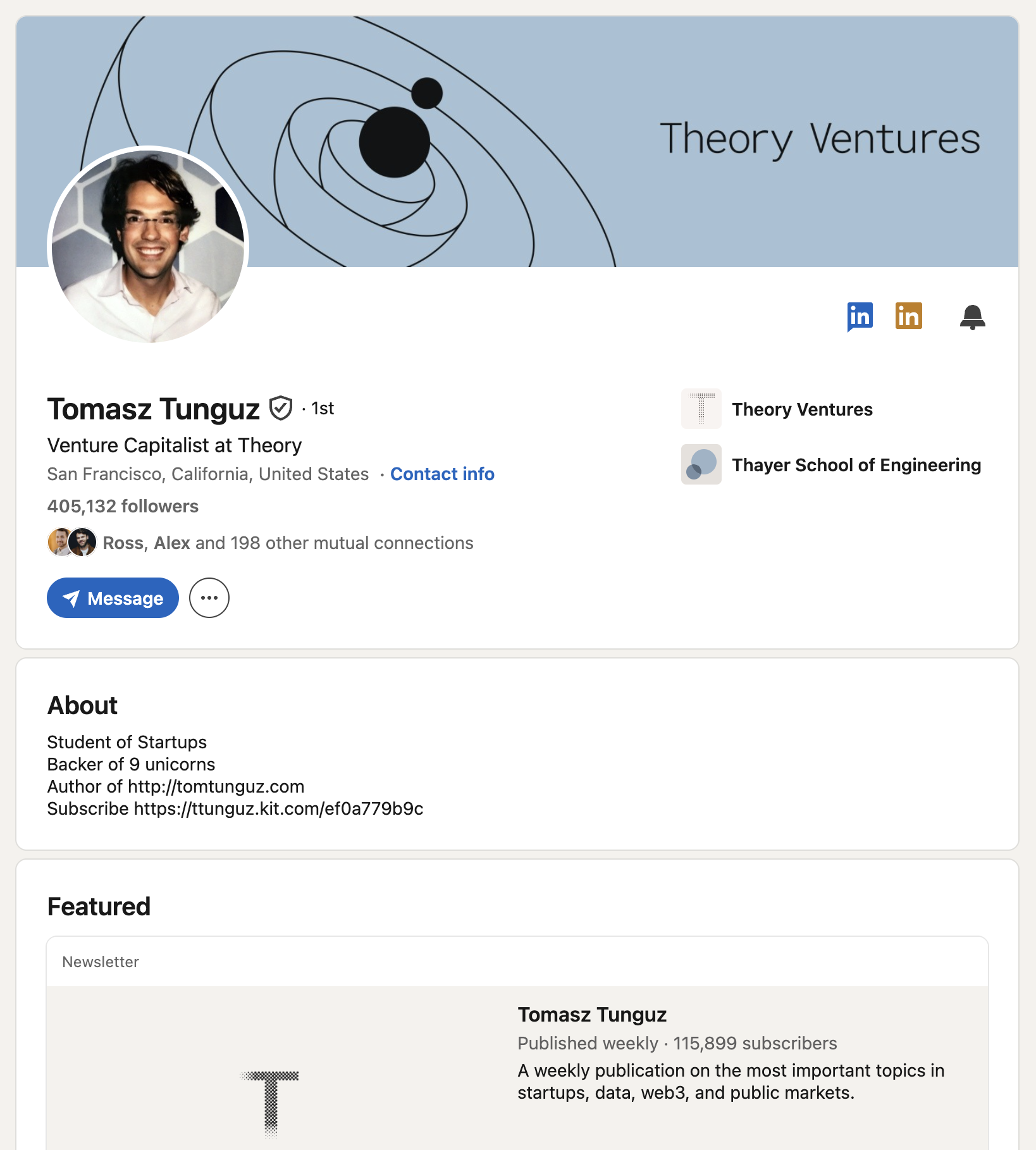
The result is a 400,000+ follower audience and a newsletter with over 115,000 subscribers, built without a single viral hack. His about section gets right to it: "Student of Startups. Backer of 9 unicorns." No paragraph of credentials. The profile reflects the same economy of language as his content. For founders and operators who want data on AI, SaaS, and enterprise markets, he has become the default source, because he showed up with something useful every day until that was simply true.
What to steal: Daily consistency with a repeatable format compounds faster than occasional brilliance. Pick a format you can sustain and publish it until the audience finds you.
Brianna Doe
Brianna Doe built her LinkedIn audience the practitioner's way: by sharing what she was actually learning while doing the work. Years of posting about B2B marketing from the inside — not as a consultant, but as someone living it — turned into a following of 250,000+. That audience became the foundation for Verbatim, the influencer marketing agency she founded, which has become the most recognized name in B2B influencer strategy and placement.
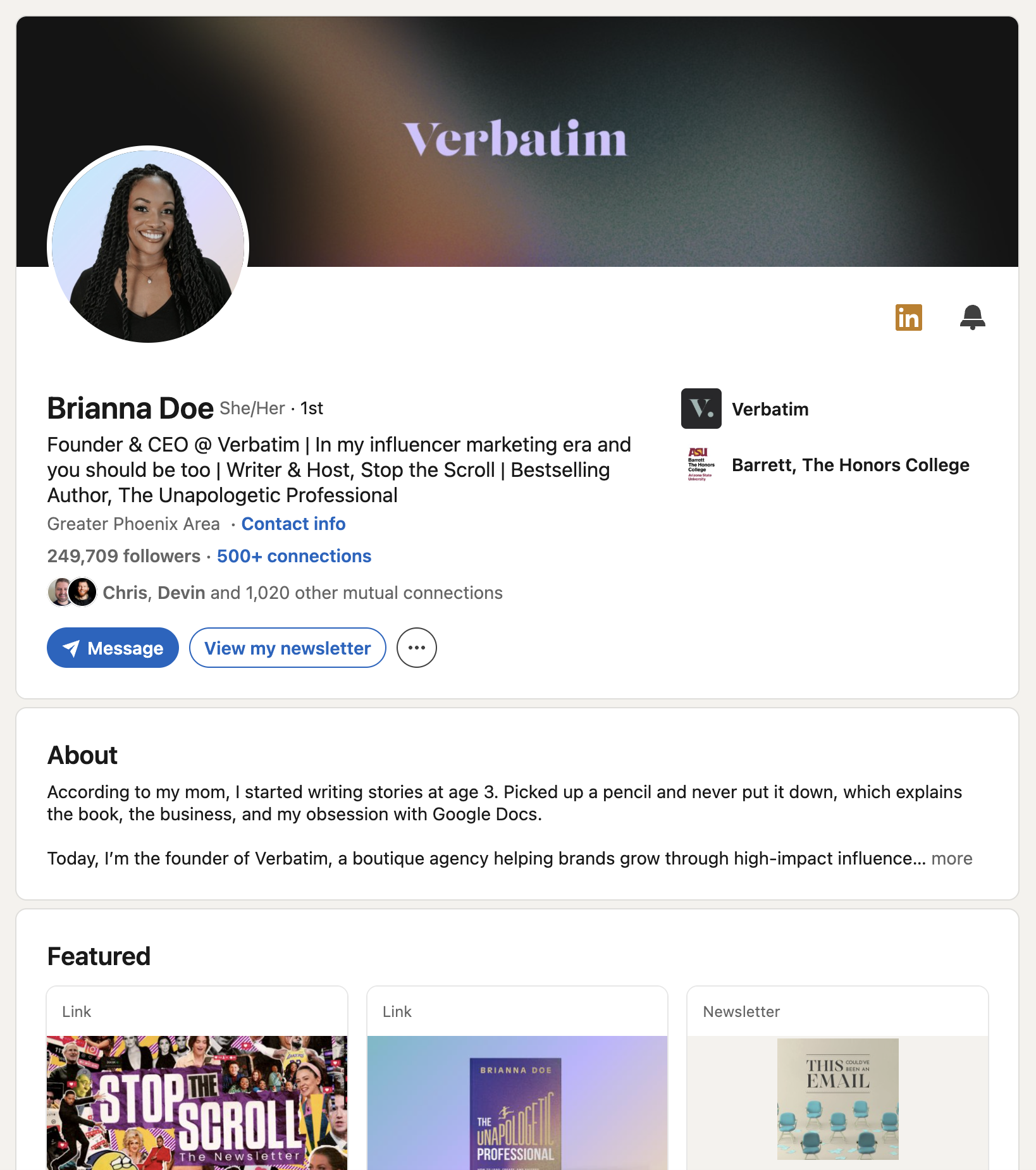
The sequencing matters. She didn't build a business and then try to build an audience to support it. She built the audience first, and the audience made the business possible. Her 2025 book "The Unapologetic Professional" and her "Stop the Scroll" newsletter and podcast grew out of the same foundation. The through-line across all of it is a willingness to be specific, candid, and useful, in exactly the way that earns trust over time.
What to steal: Build the audience before you need it. Share what you're learning while you're in the middle of doing the work. That's the content that earns trust, and trust is what turns an audience into a business.
Megan Bowen
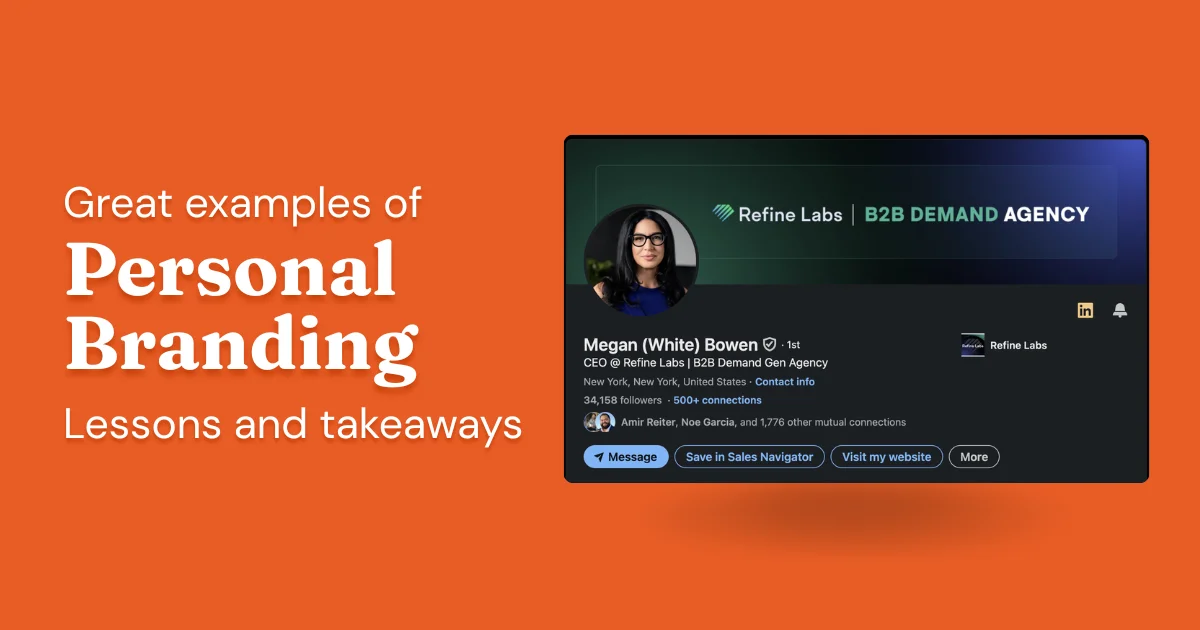
Megan Bowen leads Refine Labs, one of the most closely watched demand generation firms in the B2B world, and her LinkedIn presence is a direct extension of that work. She came up scaling GTM teams across more than 20 years at companies including ZocDoc, Grubhub/Seamless, and ManagedByQ before stepping into the CEO seat at Refine Labs in 2024.
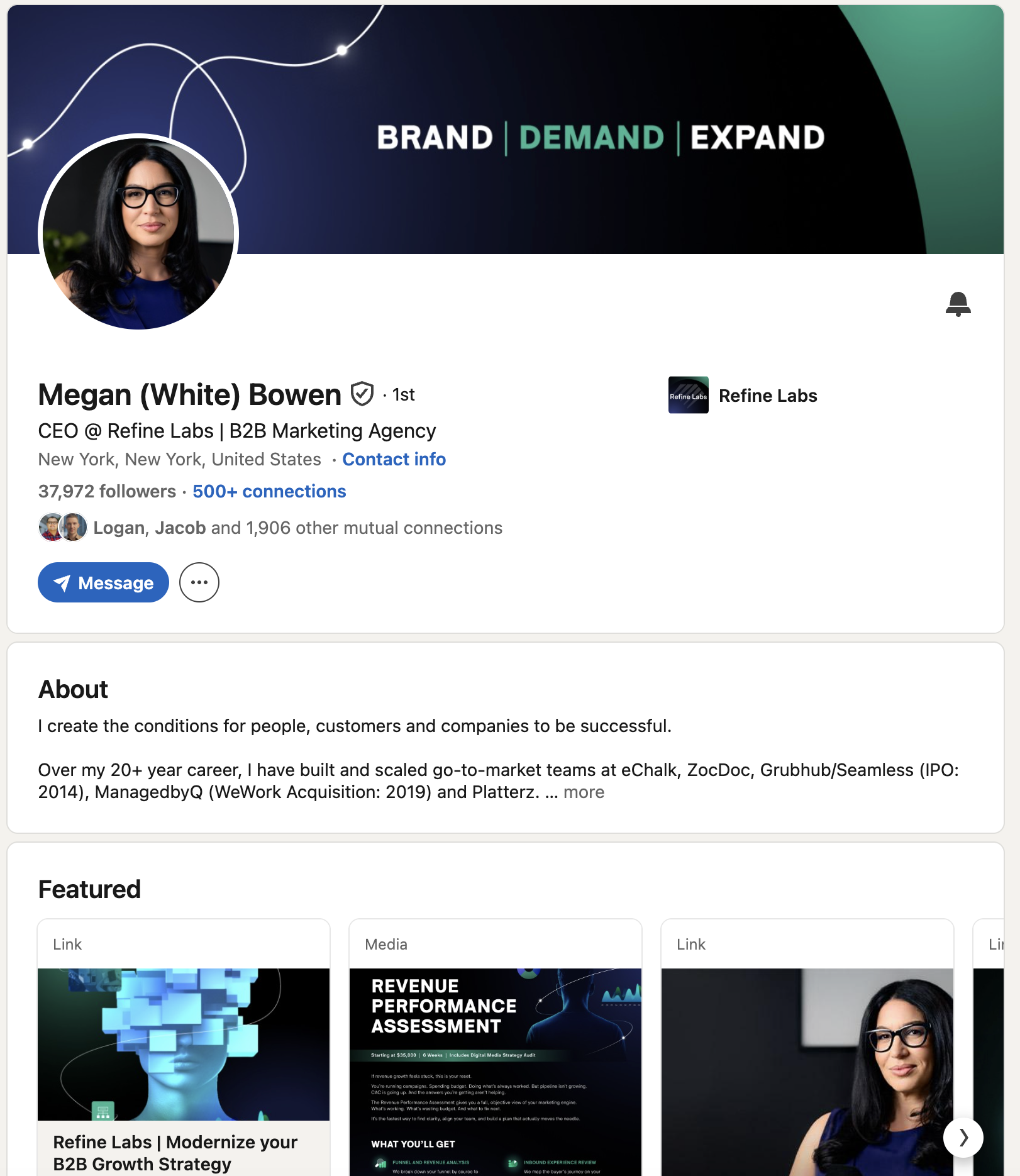
Her banner says "Brand | Demand | Expand" and that's not decoration; it's the actual Refine Labs GTM framework, displayed front and center on her personal profile. She posts on marketing philosophy, pipeline strategy, and what it means to run marketing like a CEO. The content is practitioner-led, not theoretical, and it consistently earns strong engagement from the B2B audience that cares most about those outcomes.
What to steal: Use your banner as a positioning statement. Megan's banner communicates her methodology in three words before a visitor reads a single line of her profile.
Morgan J Ingram
Morgan J Ingram opened his about section with the line that defined his brand: "In 2016, I was the worst-performing SDR on my team." From that starting point, he documented his way to becoming the most recognized name in social selling and Sales Navigator training, having since coached more than 10,000 sellers and become one of LinkedIn's longest-standing official partners.
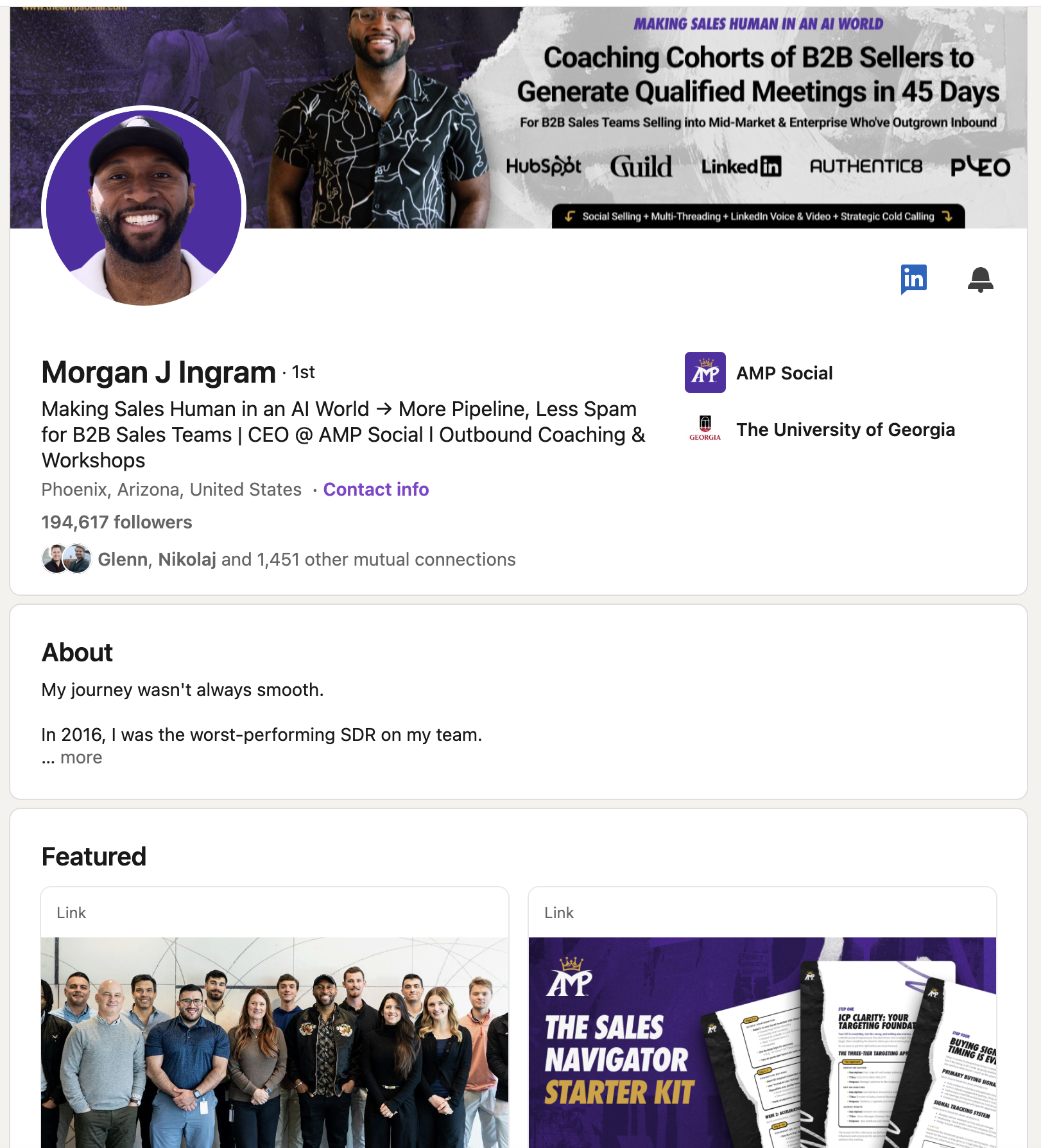
His banner is a masterclass in visual credibility: partner logos from HubSpot, LinkedIn, and others communicate trust instantly, before a visitor processes the headline. And his positioning has moved with the market. Where others treat AI as a threat to sales, Morgan's current frame is "Making Sales Human in an AI World," keeping his content relevant and his audience growing at 190,000+ followers. Ten years of showing up with useful, value-added content is the whole story.
What to steal: Your origin story is an asset, not a liability. Vulnerability about where you started, combined with consistent output over years, builds the kind of credibility that shortcuts and hacks cannot replicate.
What All Five Have in Common
What all five of these people have in common isn't follower counts or titles; it's clarity. Each of them knows exactly who they're talking to, what they stand for, and what kind of value they consistently deliver. The profile is just the packaging; the content is where the brand actually lives.
A few practical starting points:
- Audit your headline. Does it say who you help and how, or just your job title?
- Pick one content lane. What's the single topic you could post about every week without running out of things to say? Our guide to 21 types of LinkedIn posts can help you find your format, and our LinkedIn storytelling guide can help you make those posts more compelling.
- Start posting before you feel ready. The people above didn't build their brands by waiting for the perfect post.
And if you want to know whether your posts are actually landing, our LinkedIn Post Grader will score your content across hook, readability, engagement triggers, and CTA in seconds.
See what's actually driving your LinkedIn results
DemandBird helps B2B teams understand what's working on LinkedIn, so you can do more of it.
Start Free Trial