
Everyone tells you to "engage with influencers." Nobody explains which ones, what to actually write, or how to tell the difference between a creator whose audience will buy from you and one who's built a following of aspiring creators who never will. If you want to sponsor someone, the gap between a good partner and a costly mistake is even wider.
A useful starting point: think of the practitioners in your niche you'd actually cite in a client meeting. Not the big LinkedIn names, but the people your buyers already follow and trust. If you can rattle off a few without looking anything up, those are your anchors. If you struggle to get past two or three and want to build a working list of dozens or more, you need a method for finding them systematically.
Below, I'll walk through how to find those people (including using LinkedIn's People Search filters to build precise lists), how to engage them in a way that scales, and how to take those relationships offline if you're looking to sponsor them.
For niche or B2B products, micro/medium influencers beat big celebs
Should you focus your energy on the biggest names on LinkedIn, or find smaller, less-followed creators who are tightly embedded in your niche? The answer depends heavily on what you're actually trying to accomplish.
If you're selling high-value ($10k+) B2B solutions, niche is always better than generic. Justin Welsh, Lara Acosta, and so forth are all either touting their own tools, and/or charging a huge premium despite having followings that aren't very relevant to anything but a "mass market" horizontal tool. (So if you're a B2C/Prosumer VC-backed tool, you might be able to disregard this advice... maybe!) Almost all of the time, though, a hand-selected group of niche influencers, pound for pound, will beat the same follower count worth of larger ones.
The exception: if your primary goal is growing an audience as fast as possible and you don't need that audience to be buyers specifically (you're an author, you sell a low-price SaaS, you're building toward your own sponsorships), then going broad and engaging with the biggest creators makes sense. Just go in knowing what you're optimizing for.
Make your influencer engagement stand out
If your comments are generic or ChatGPT-generated, you'll get written off by the influencer as not a valuable partner, or uncreative, or uninterested; if they work with you at all, you'll get their highest rate and worst terms.
Here's what does work.
- Only engage when you mean it. Forced enthusiasm reads as hollow immediately. When something resonates, let that come through naturally.
- Contribute information gain. A good comment extends the conversation: it explains why you agree or disagree, raises a question worth answering, or adds a perspective the original post didn't cover.
- Be honest about your sense of humor. Attempted humor that isn't authentic to your voice reads as try-hard and undercuts everything else.
- Let real familiarity show. If you've actually met someone, collaborated, or had a genuine back-and-forth, your comment should reflect that. Writing like a stranger when the relationship exists looks performative to anyone who can see it.
- Bring your authentic self into the story. A brief piece of your story, if it genuinely adds to the thread, makes you memorable in a way that generic agreement doesn't.
- Show up to give, not to extract. A comment doesn't create an obligation to respond. Think of it like a good conversation at an industry dinner: you're there to contribute, not to hand out business cards and wait for callbacks.
How I've built sponsor partnerships
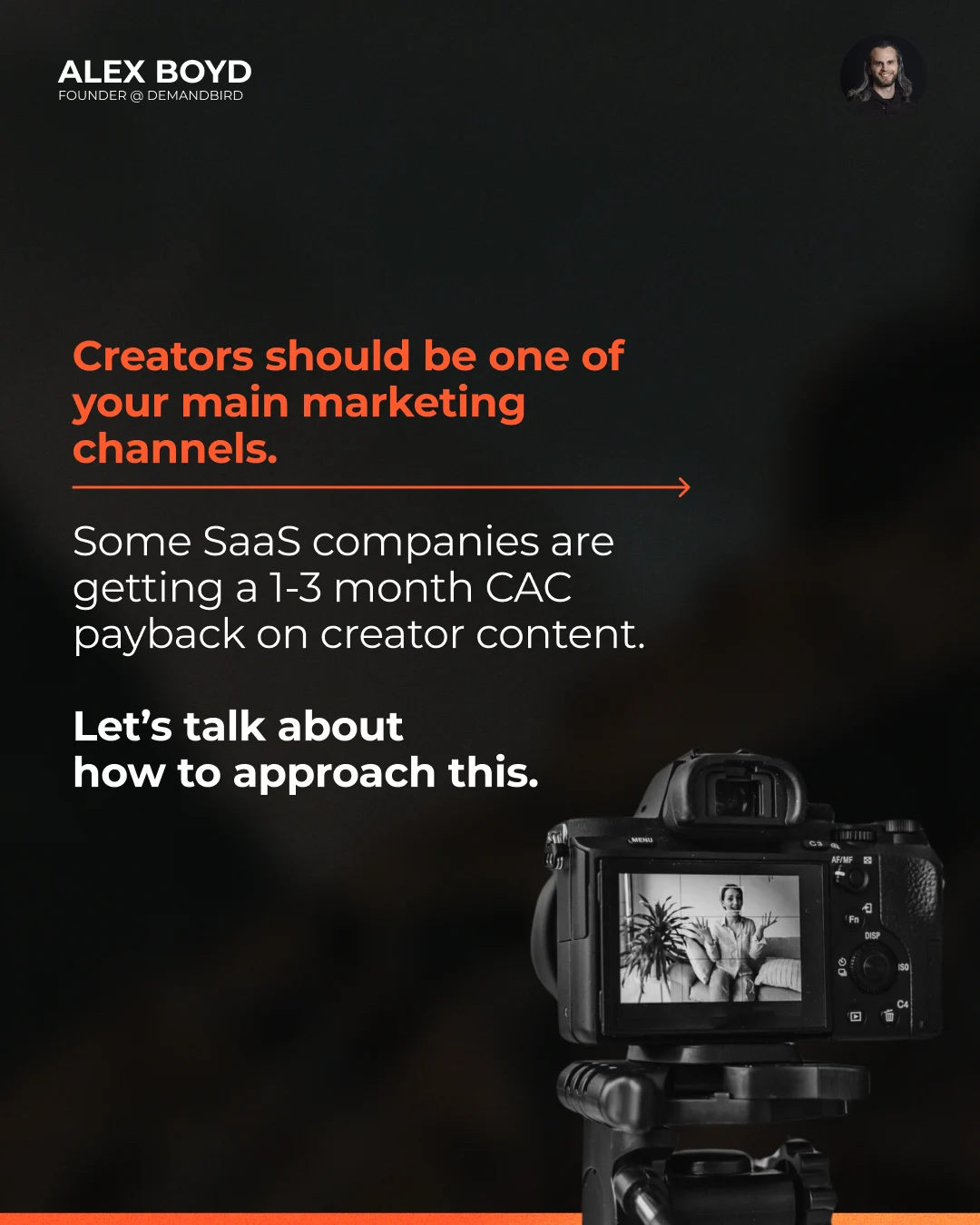
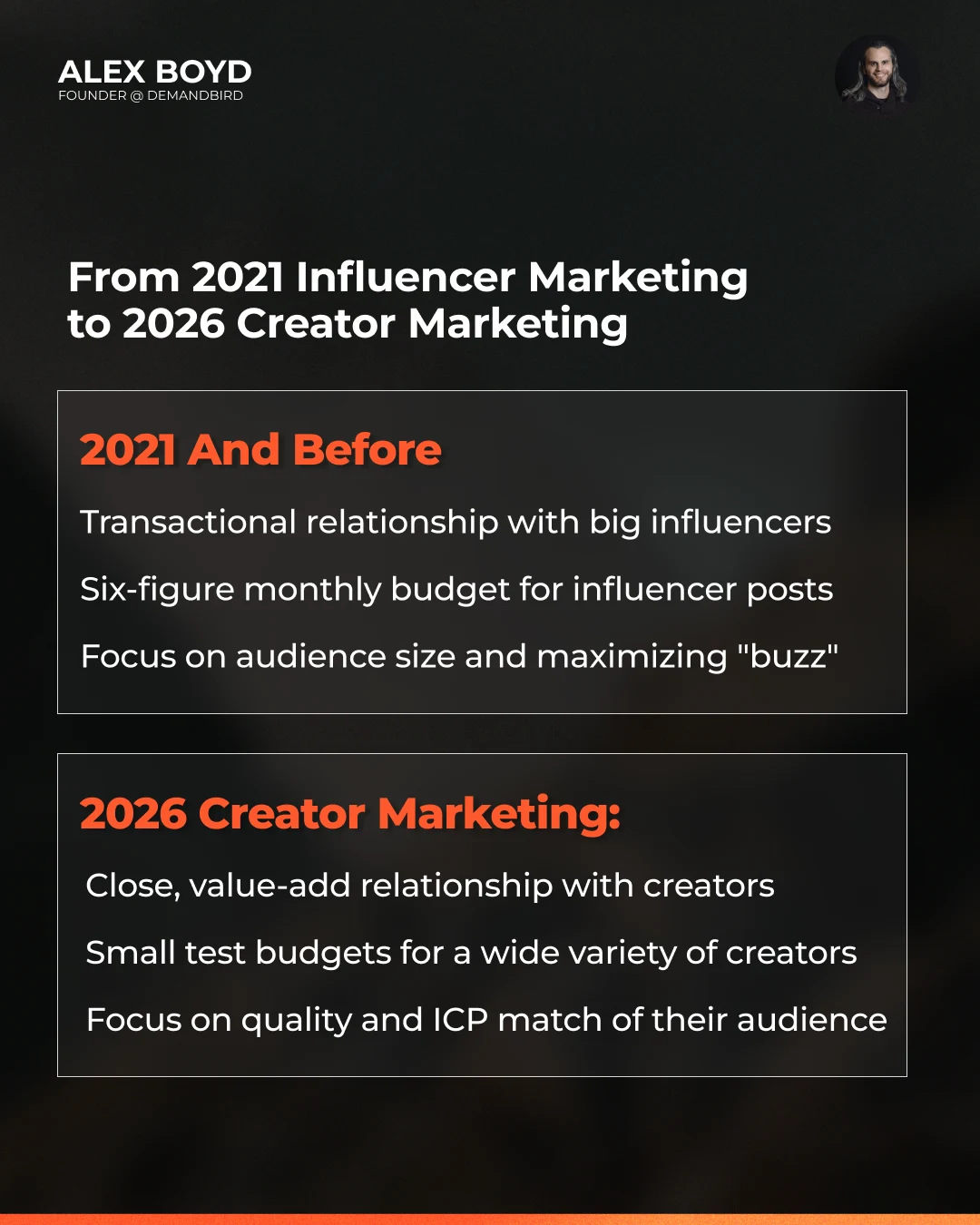
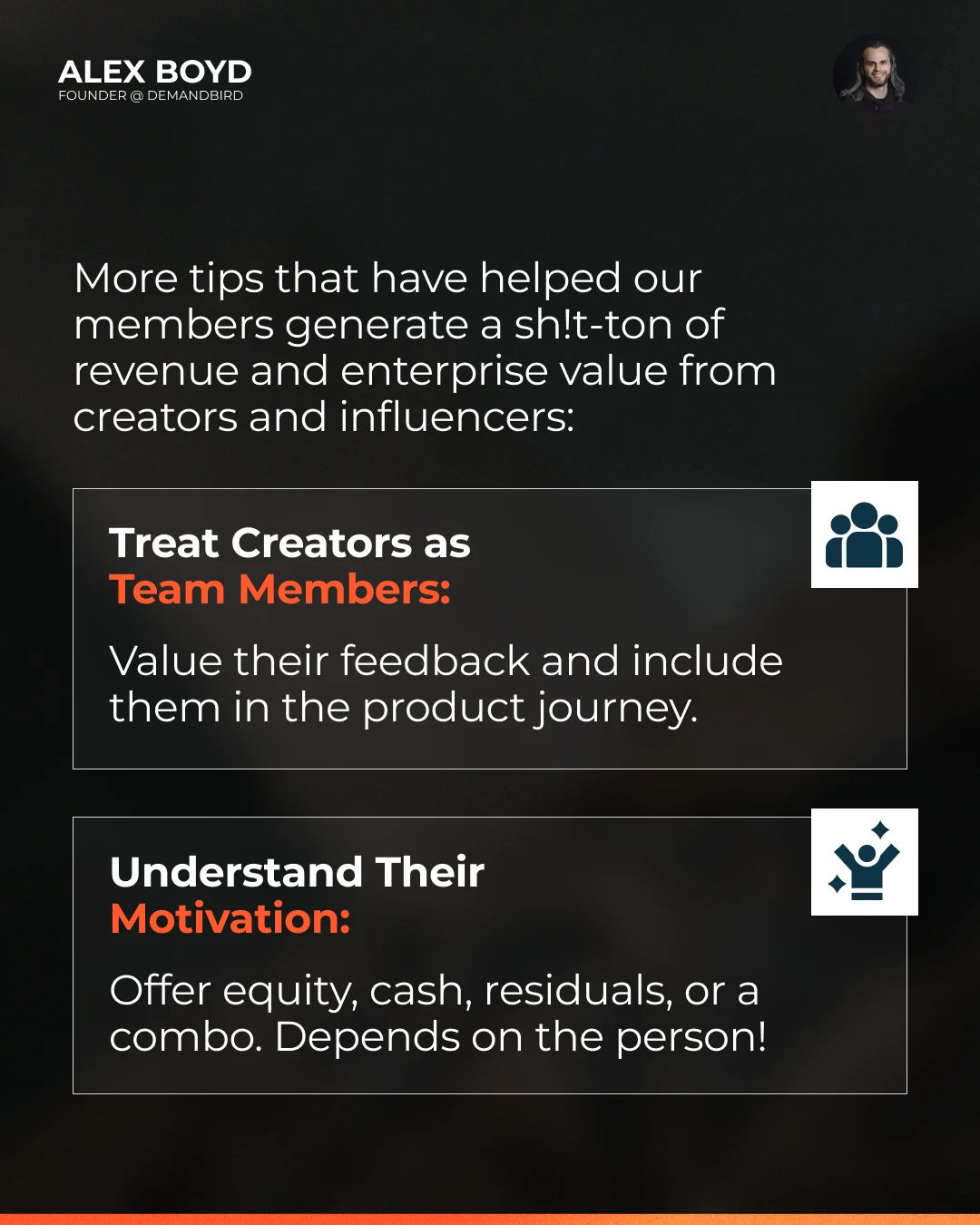
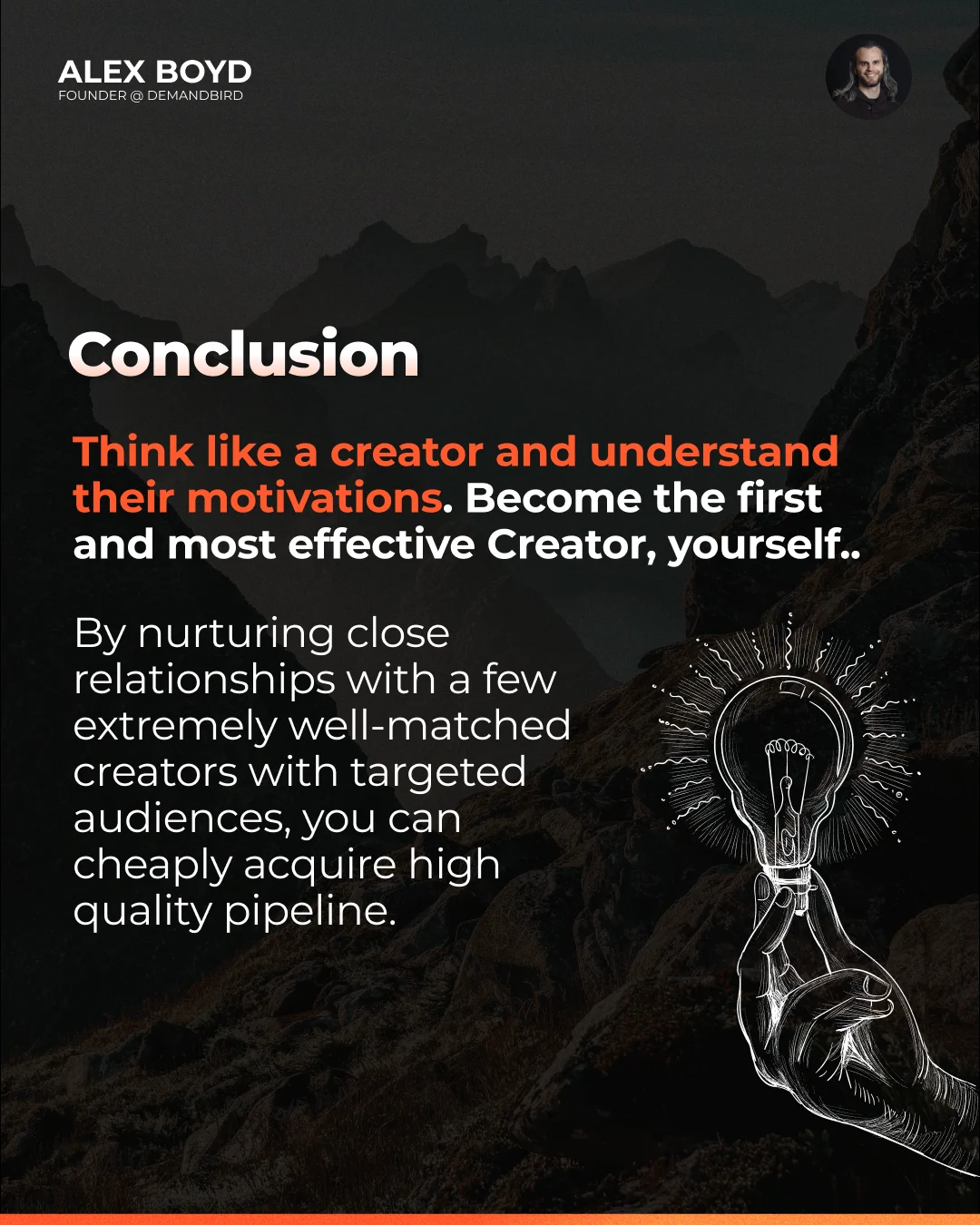
Engaging with high-profile people is wonderful. If you also would like to actually hire their services as a sponsor partner, how should you do that? In B2B, this is often referred to as "influencer marketing". But it's both very effective and very misunderstood. The mindset shift that matters: treat it as building a genuine industry relationship, not executing a media buy. The partners who have worked best for me over the years moved well beyond transactional "you post, I pay" arrangements, and that happened because I invested in them as peers, not vendors.
Here's how:
You have to lead the way.
The first step is showing up yourself. Posting and engaging consistently in your niche gives you credibility when you eventually reach out to others. It also means you're bringing something to the table, not just asking for access to someone else's audience. This requires building the right network, not just a large one.
Understand the industry very well.
Staying active naturally surfaces who's producing quality content and who's getting real engagement. I pay attention to both quantity (how many comments) and quality (do the comments look like actual people with opinions, or bot-adjacent noise). That distinction matters a lot when you're evaluating who to sponsor.
Take the conversation offline.
Once the conversation happening publicly merits a private DM, based on your intuition and social skills telling you this is appropriate, send something nice. A unique acknowledgement, a compliment, whatever it is: the point is to communicate you aren't just a random company representative with another tool you're hawking. To earn your way into a partnership, you have to be an industry equal. Not necessarily in audience size, but in clout and insight.
Start small first.
Once you're on warmer ground, if you sense an opening, it's time to suggest some sort of co-produced post, show, or other form of content. You can allude to the fact that you also sometimes work with sponsors, or want to.
See how built-out their process is.
As you converse, get a sense of whether they're putting you into some sort of "sponsor lead funnel" with packages, rates, decks, and an assistant; or whether they're more informal. Usually, I get the best results from partnering with people who have not yet "fully professionalized" their offering. In contrast are "professional influencers", who often have large audiences but have jacked their rates way up.
Audience count does not equal audience weight.
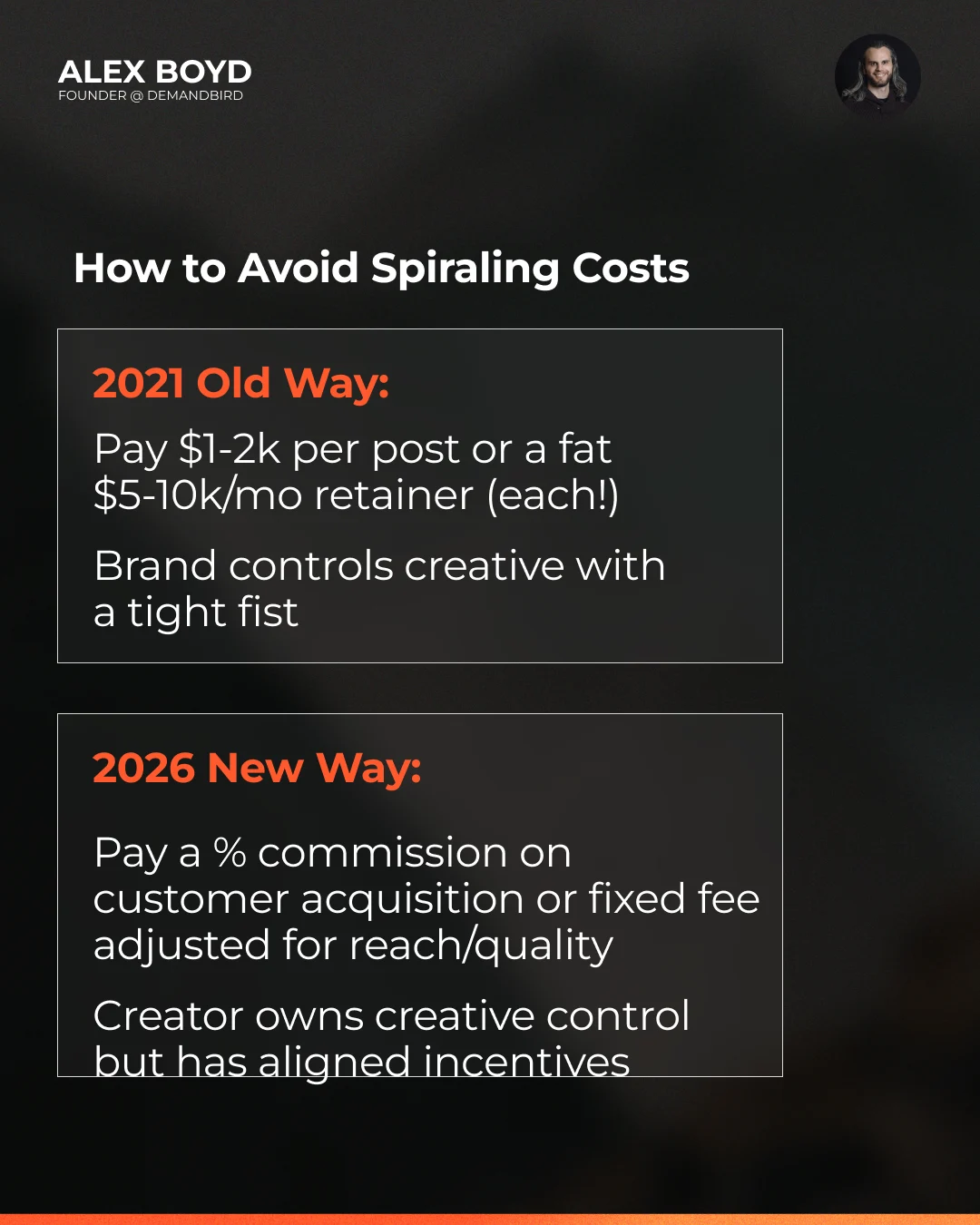
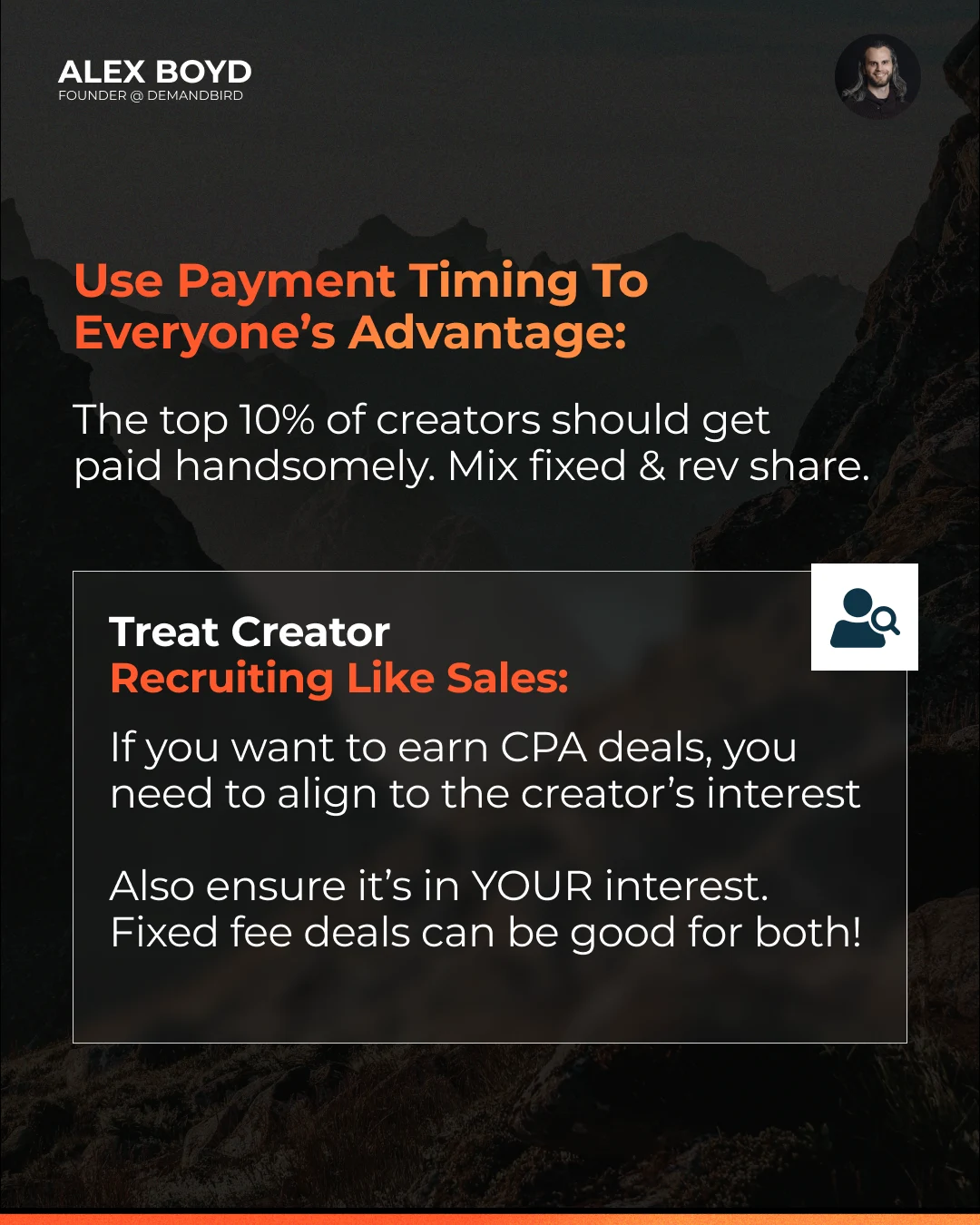
Anything above $2k per post, usually asked for by large creators, means I am going to likely overpay for what I'll get in terms of customers on the other end. The only exception is if their audience is just so strikingly appropriate for our product, that they're one of the only meaningful voices in the space that could feasibly talk about us. Ideally, your creator partners have an annualized reach of 1M to 5M Members Reached, for a good balance of cost and return.
Be aware when you're asking THEM to take risk.
Creators get approached constantly with offers from SaaS and AI tools to talk about their products. A lot of this is disrespectful in that it comes with a no-cash-up-front offer and puts all of the revenue share into sales-based commissions, BUT the product company doesn't make any attempt to bring the creator into the equation. If you're going to ask creators to take an affiliate deal, make sure it's very clear based on your track record of managing and paying affiliates generously. And make it clear that you understand an affiliate arrangement is more risk on their part, and less on yours, so don't be entitled or expectant if you're offering this.
If you pay per reach, use a ceiling.
I often spend between $15 and $80 CPM; in other words, per thousand impressions the creator/influencer gets on their post about us. But to prevent huge viral spikes, where they luckily get 500k impressions vs their normal of 5k, I put a cap on the total I'll pay per post. You might ask: why? If their post goes viral, isn't that good for you too? Well, kind of, but when a post goes truly viral, it often starts getting shown primarily to people outside of the usual demographic that you planned to reach. If you give creators large creative freedom, your product mention might have ended up as just a tangential aspect of the post, which was otherwise creative and engaging but not "really about you or your company". In that case, you don't want to pay out the wazoo just because the creator did a good job building their brand without their reach upside benefitting you, the sponsor, much at all. You can work "good faith resolutions" into your agreements to prevent disputes here in cases where the narrative I just described isn't really what happened.
Work together on content distribution.
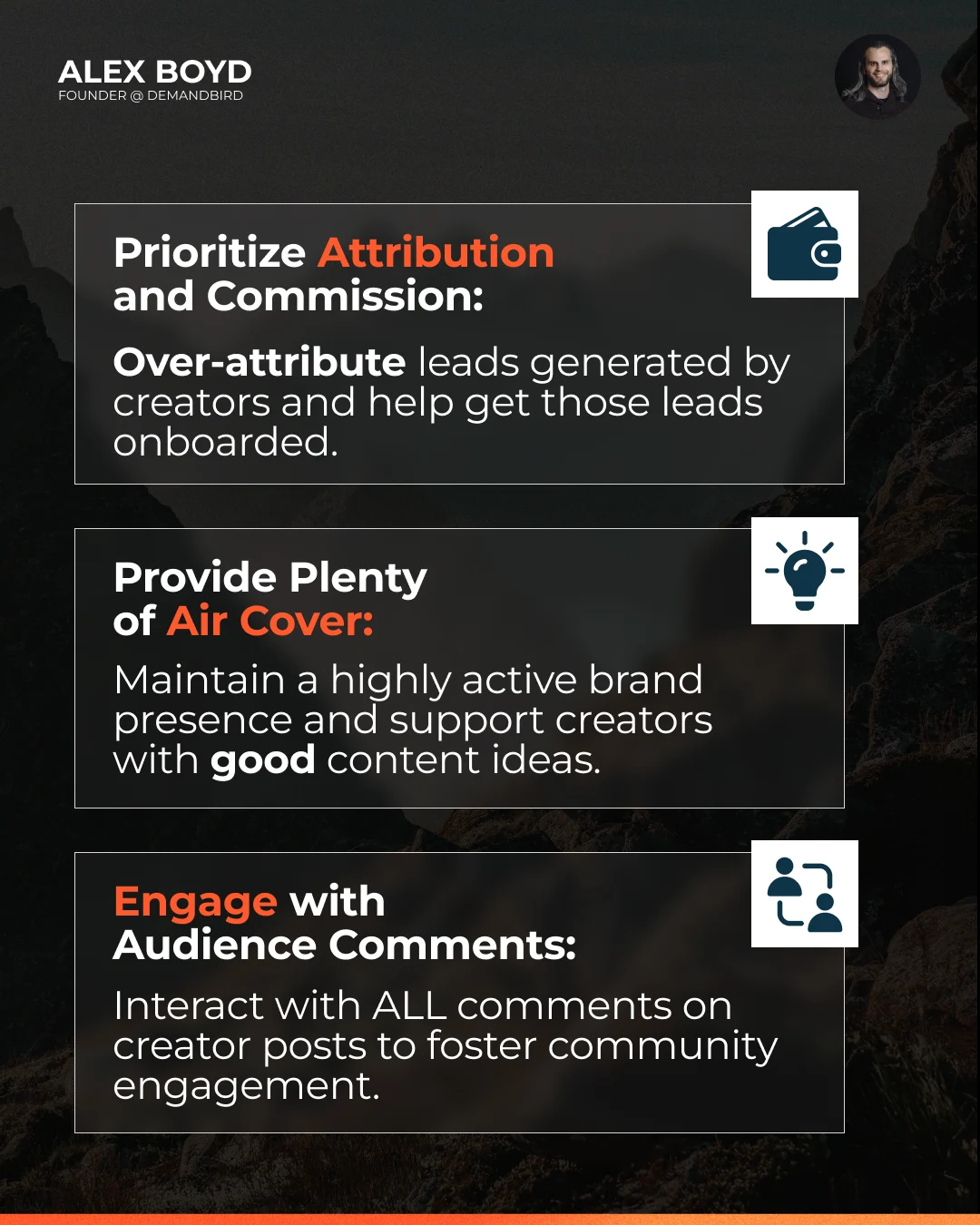
It's annoying for the creator, and not great for you, if they write this big post about you and on launch day, you're nowhere to be found. If you're truly a partner, you'll be in the comments section, engaging with people who engage with the influencer, showing that relationship, talking to them, and supporting. What, you don't want to show up to your own book launch? :)
Confirm their audience quality is high.
I take extra care to look at not just the top line results like reach/impressions and engagement. Website traffic and even signups to your product are not really "enough" on their own. You need to also ask yourself: between the creators we work with, which ones produce high-spend, high-retention customers? In contrast: which of our partners tend to send lower-quality, high-churn subscribers our way? (If you're curious, we use SaaSPulse.io to monitor affiliate and partner conversion quality. Check them out.)
Expand with the best partners.
A few months in, you should have an increasingly good sense of which creators are really pulling their weight and deserving of more budget, which ones might just be taking time and need to rotate through more post creatives, and which you should not continue to sponsor because of the quality of revenue, or lack thereof, from those partnerships. Now, it's true that if you're in high-ticket B2B, you won't see an immediate return from every partnership, but you should definitely be seeing ICP engagement, leads, meetings, comments, and so forth: even when selling to enterprise, you can still judge influencer quality on leading indicators.
Write once. Post everywhere.
DemandBird repurposes your best content for every platform and schedules it all automatically.